All These Women 1964 Ingmar Bergman
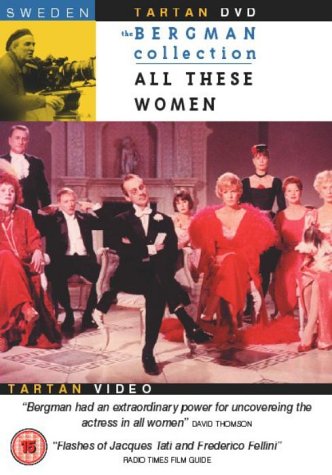
The films of Ingmar Bergman fall crudely into two categories. First, there are those which are works of great depth and feeling, films of genuine artistic merit in which the director invested every last drop of conscious effort and which reveal great humanity and insight. Then there are the films which Bergman made, either under a restrictive contract or at a time of personal crisis, to which he was not whole heartedly committed, films that were little more than purely commercial enterprises. The majority of Bergman's films fit into the first category, and this includes some of the most highly regarded pieces of cinema ever made. The second category comprises a small number of lesser works which, whilst judged somewhat more favourably today, were pilloried by the critics and virtually disowned by their director.
Windows Xp Pro Sp3 Ultra Lite Ita Music. All These Women (1964). Takes its title from 'Yes, We Have No Bananas,' a song featured prominently on the All These Women soundtrack. Director: Ingmar Bergman. What is so rare, and cherishable, as an Ingmar Bergman comedy? _All These Women_ concerns the sexual misadventures of cello-playing Jarl Kulle.
All These Women belongs to this unfortunate category of second class Bergman offerings. All These Women was made immediately after Bergman had finished shooting (1963), the third in a series of austere films which explored some deep metaphysical themes.
Anxious that The Silence would be a flop, Bergman was easily persuaded to follow it up with a comedy which would have much broader appeal. At the time, the director was close to nervous exhaustion which was accentuated by the far from favourable treatment he was receiving from his critics. All These Women was more an exercise in catharsis than a serious attempt at making a film, so it is little wonder the film failed to make much of an impact. Bergman wrote the screenplay for All These Women with Erland Josephson, an actor who worked with him on a number of occasions - most famously on his landmark 1973 television series.
The film features many of the actresses who had starred in previous films by Bergman, some of whom he had had intimate affairs with. The male lead was Jarl Kulle who, as the pompous music critic Cornelius, is the virtual re-incarnation of the Don Juan character he had previously played in Bergman's earlier film (1960), albeit with a camp comic slant. Most significantly, this was Bergman's first colour film; its failure contributed to the director's great reluctance to use colour in future years. It's not too hard to see what kind of film Bergman had envisaged making - a scathing satire on artistic criticism. Unfortunately, this gets somewhat lost behind the pratfalls, boudoir farce and general Max Linder style tomfoolery. The characters are the crudest of ciphers, the jokes about as subtle as those you would expect to find in a cheap Christmas cracker, and the plot virtually non-existent.