How To Load Program For At89c51 Microcontroller
I know that you are ready to write the first program. You have been through a lot so far! While we are on the subject, let's recap the events. You went out and purchased the of your choice. I chose the for my uses. You were introduced to the how they work; and were also introduced to the programmer, the device that helps transfer the program into the microcontroller. Customer Support Tool Sharp Xe-a203 here. You that is used to connect the SPI pins to the correct pins of the microcontroller.
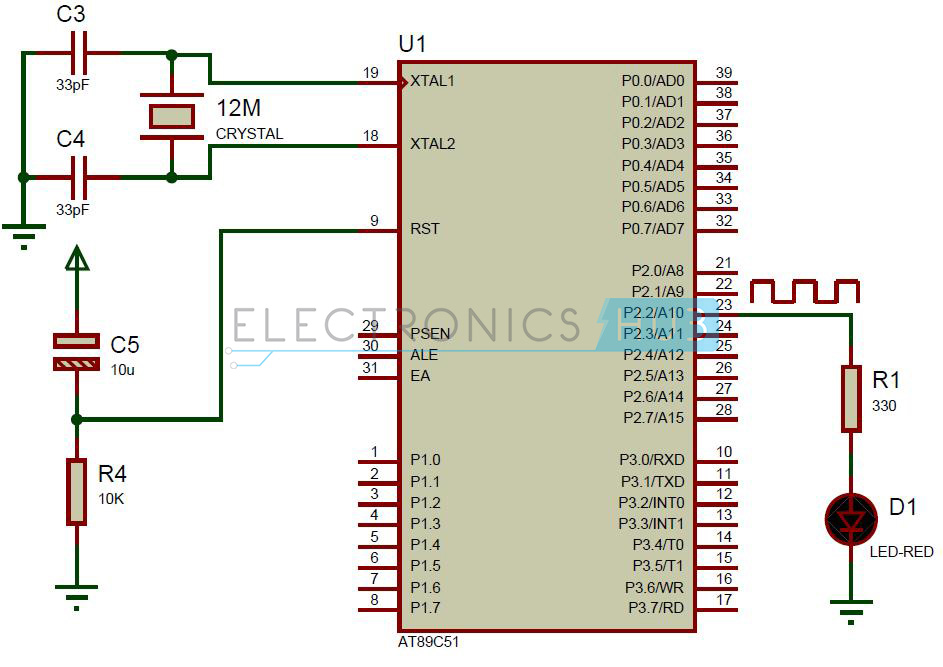
Infographic provides a information in 10 easy steps, to burn the program into a 8051 microcontroller and to build 8051 microcontroller projects. Thread 10871: Hi, can anybody suggest me a good book about how to program aAtmel AT89c51 microcontroller chip using C language with keil crosscompiler. Apr 15, 2012 How do you program a AT89c51 microcontroller? Have another processor and a way to load the code into. The best program you. Interface keypad with 8051 microcontroller (AT89C51). How To Load Program For At89c51 Circuit Training How To Load Program For At89c51 Circuit Breaker.
You verified that the for the 32-bit and 64-bit versions of Windows (XP, 7 and Vista). You also installed the programming environment so that you can have an environment in which to write your program, and then transfer it into the microcontroller. And to make sure that everything functions correctly, you used avrdude to while plugged into the computer and the microcontroller. Recall that this program is the program transfer utility to move our compiled program into the memory on the microcontroller. Finally, you built the first circuit so that we could have something to write a program for. That was a lot! But since you jumped through all of those hurdles, the hard work is over and it's smooth sailing from here on.
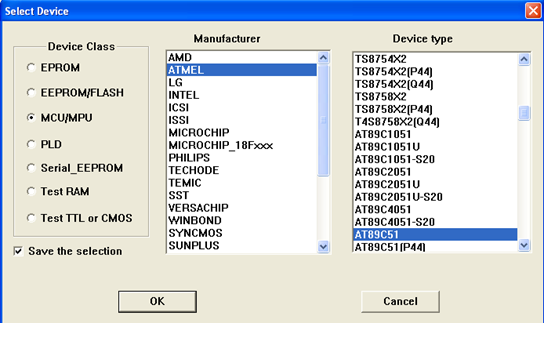
Hopefully you were able to get through the previous steps without any problems--so now let's get on with our first program. For the sake of simplification, let's categorize the function of the microcontroller into three categories: Control, sensing and communication. We'll leave the details of how to develop each of these functions, and delve into these details as we write the various programs. Note that there are many ways to program these functions. For the first program, we'll make the microcontroller 'control' something. And as you know from the previous post, we'll be using an LED for this purpose. Basically, we will turn the LED on.
Boring, right? Well I need to start somewhere!