Server Core Startup Programs

Hi all, I am configuring startup programs on Server Core using Registry modifications. All I am doing is just editing regsitry to add an executable file entry to HCU Software Microsoft Windows CurrentVersion Run. For example, add 'Notepad' (REG_SZ) ===>'c: windows system32 notepad.exe' under the above mentioned registry key. I expected Notepad to open everytime Admin logs in. Er211 Smartphone Recovery Pro Crack. But I don't see this application running when the administrator user logs in.
Admin”s Guide to Server Core Commands. Below you will find a list of the commands that are required to install Roles and Features on Server Core. DNS start /w. Install GUI apps on Windows Hyper-V Server and Windows Server Core. You can then start the app by calling its executable. In this case 'C: Program Files.
Do you know if this is a supported scenario in Server Core? If so, is there a known issue with this? Chrissy So Delicious. Thanks for your time, Ravi.
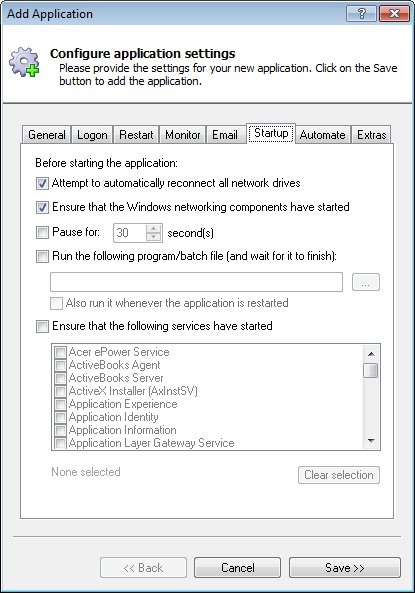
If you want to add a program that runs at startup for every user in Windows 2000, navigate to the following key: HKEY_LOCAL_MACHINESoftwareMicrosoftWindowsCurrentVersionRun and add a new String value. The name of the key is arbitrary and is simply used for identification, but the value of the string must be the full drive and pathname to the executable or batch file you want to run. If your program includes switches or options, you must pass them like this (note the use of the quotes): ' /switch1 /option2 If you want keys in the Run section to execute in a certain order, your best bet is to put them all into a batch file in the order you want them to run in, and then execute the batch file from the key.
To add programs that run only once when you start Windows 2000, add keys in the same fashion to this subkey: HKEY_LOCAL_MACHINESoftwareMicrosoftWindowsCurrentVersionRunOnce Note: All RunOnce keys expire after they conclude their run, whether or not they exited successfully. If you want to execute Run or RunOnce for a specific user, you need to modify the key: HKEY_USERSSoftwareMicrosoftWindowsCurrentVersionRun HKEY_USERSSoftwareMicrosoftWindowsCurrentVersionRunOnce where is the ID number for the user in question.